Surfaces Restored Before Damage Spreads
Concrete Repair & Resurfacing in Muskegon for driveways, patios, and walkways showing cracks, spalling, or worn surfaces
Cracks wider than a quarter-inch, spalling that exposes aggregate, and flaking surfaces that shed material indicate concrete deterioration that requires intervention before structural failure develops. Mckinley Concrete LLC addresses cosmetic wear through resurfacing and targets failed joints, structural movement, or base erosion with repair methods suited to each condition. The approach depends on whether damage stems from surface wear that polymer overlays can correct or underlying base failure that demands removal and replacement.
Repair begins with surface preparation—grinding, crack routing, or mechanical cleaning that removes loose material and creates a sound bonding surface. Joint resealing, crack filling with flexible sealants, and polymer overlay application restore appearance and protect the slab from further moisture intrusion. Compatible protective sealers applied after repair extend the surface life by reducing water absorption, freeze-thaw damage, and staining.
Request an on-site assessment to determine whether your concrete requires resurfacing or full replacement.
What Changes After Repair or Resurfacing Completes
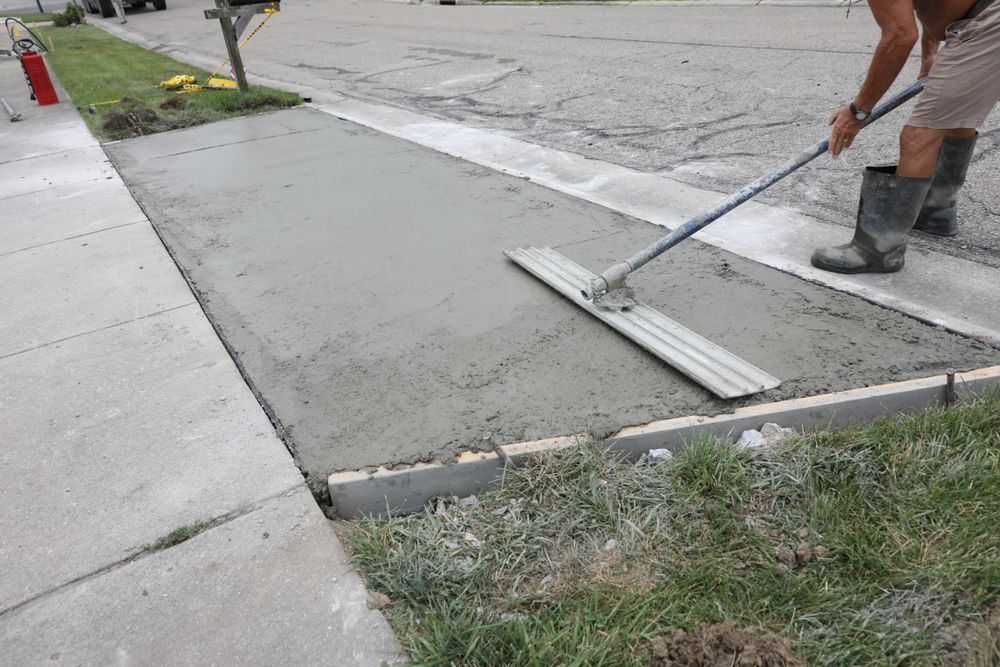
Distinguishing cosmetic deterioration from structural failure determines whether resurfacing produces a lasting result or whether the slab needs complete replacement. Surface flaking, minor cracks, and worn finishes respond well to overlay systems that bond to sound concrete beneath, while slabs with significant settling, large cracks that reopen seasonally, or extensive spalling typically indicate base failure that resurfacing cannot correct. Chemical or mechanical surface preparation ensures that repair materials bond properly rather than delaminating within a season.
After repair, you notice a uniform surface free of loose material, sealed joints that prevent water infiltration, and restored color that eliminates the patchy, deteriorated appearance present before. The slab resists further cracking and flaking because moisture can no longer penetrate cracks and expand during freeze-thaw cycles common in the Muskegon lakeshore climate.
Grinding removes surface irregularities and exposes fresh concrete for bonding, while crack preparation involves routing cracks to a uniform width and depth before filling. Polymer overlays provide a new wear surface that resists abrasion, de-icing salts, and staining better than aged concrete. Sealer selection depends on the surface finish, exposure conditions, and whether slip resistance or moisture vapor transmission matters for the application.
Answers to Frequent Service Questions
Repair and resurfacing decisions depend on the extent of deterioration, the cause of damage, and whether the existing slab remains structurally sound beneath cosmetic wear.
What causes concrete to spall and flake?
Spalling occurs when water enters the concrete, freezes, and expands, breaking off surface layers—particularly in Muskegon's freeze-thaw climate where temperature cycles repeatedly stress the material.
How is surface preparation done before applying an overlay?
The concrete is mechanically ground or shot-blasted to remove contaminants, open the pore structure, and create a clean, rough surface that allows the overlay to bond chemically and mechanically.
When is resurfacing practical instead of full replacement?
Resurfacing works when the slab remains level, structurally sound, and free of significant settling or movement, addressing only surface wear rather than underlying base or structural failure.
Why do failed joints need resealing during repair?
Joints accommodate thermal expansion and prevent random cracking, but deteriorated joint sealant allows water infiltration that accelerates spalling and freeze damage along joint edges.
How long does a protective sealer last on repaired concrete?
Sealers typically require reapplication every two to four years depending on traffic, weather exposure, and de-icing chemical use, with high-traffic areas wearing faster than sheltered surfaces.
Mckinley Concrete LLC inspects concrete damage to distinguish surface deterioration from structural problems and recommends repair or replacement accordingly. Call (231) 462-8818 to schedule a property evaluation and receive guidance on the most practical approach for your concrete.